





Off-grid solar inverter vs hybrid: which should buyers choose?
- 1. What are the primary differences between off-grid and hybrid solar inverters?
- 2. How do off-grid and hybrid inverters handle energy storage and backup power?
- 3. What are the cost implications of choosing an off-grid versus a hybrid solar inverter?
- 4. How do off-grid and hybrid inverters differ in terms of grid interaction and net metering?
- 5. What are the installation and maintenance considerations for off-grid and hybrid inverters?
- 6. Which type of inverter is more suitable for specific applications?
1. What are the primary differences between off-grid and hybrid solar inverters?
Off-grid and hybrid solar inverters serve distinct purposes in solar energy systems:
Off-Grid Solar Inverters operate independently of the utility grid, converting DC power from solar panels and batteries into AC power for household use. They are ideal for remote locations without grid access, providing complete energy independence. However, they cannot draw power from the grid, which may lead to power shortages during periods of low solar generation.
Hybrid Solar Inverters combine the functionalities of off-grid inverters and grid-tied inverters. They manage power from solar panels, batteries, and the utility grid, optimizing energy use and storage. Hybrid inverters can export excess solar energy back to the grid, potentially earning credits or reducing electricity bills. They also provide backup power during grid outages by switching to battery storage.
2. How do off-grid and hybrid inverters handle energy storage and backup power?
Off-Grid Inverters rely solely on battery storage to supply power when solar generation is insufficient. They do not have access to the utility grid, so if battery storage is depleted, there is no alternative power source, leading to potential outages.
Hybrid Inverters store excess solar energy in batteries for use during low-sunlight periods or outages. Additionally, they can draw power from the grid when necessary, ensuring a continuous power supply even if battery storage is low. This flexibility allows for uninterrupted power during grid failures.
3. What are the cost implications of choosing an off-grid versus a hybrid solar inverter?
Off-Grid Inverters generally have a lower initial cost due to their simpler design and functionality. However, the total cost of ownership can be higher over time, considering the need for larger battery banks and potential maintenance expenses.
Hybrid Inverters have a higher upfront cost due to their complex design and additional features. Despite the higher initial investment, they offer better long-term value by providing energy flexibility, potential grid interaction benefits, and backup power capabilities.
4. How do off-grid and hybrid inverters differ in terms of grid interaction and net metering?
Off-Grid Inverters operate independently and cannot interact with the utility grid. They do not support net metering, as they cannot export excess energy back to the grid.
Hybrid Inverters can connect to the utility grid, allowing for net metering. This means they can export surplus solar energy back to the grid, potentially earning credits or reducing electricity bills. This feature is particularly beneficial in areas with favorable net metering policies.
5. What are the installation and maintenance considerations for off-grid and hybrid inverters?
Off-Grid Inverters are typically easier to install, as they do not require grid connection approvals. They are suitable for remote locations where grid access is unavailable. Maintenance involves monitoring battery health and ensuring the system operates efficiently without grid support.
Hybrid Inverters require more complex installation due to the need for grid connection and compliance with local regulations. They may also require additional components like battery management systems and grid-tied equipment. Maintenance includes monitoring both the solar and grid interactions, as well as battery health, to ensure optimal performance.
6. Which type of inverter is more suitable for specific applications?
Off-Grid Inverters are ideal for remote areas, cabins, farms, or locations where grid access is unavailable or unreliable. They provide complete energy independence but require careful planning to ensure sufficient battery storage and solar generation capacity.
Hybrid Inverters are suitable for urban or suburban areas with existing grid access. They offer flexibility by allowing users to benefit from solar energy while maintaining a connection to the grid for backup power and potential cost savings through net metering.
In conclusion, the choice between off-grid and hybrid solar inverters depends on your specific energy needs, location, and budget. Off-grid inverters offer complete independence from the utility grid, making them suitable for remote locations. Hybrid inverters provide flexibility by integrating solar energy with grid connectivity, offering backup power and potential cost savings. Assessing your energy requirements and considering the advantages of each system will help you make an informed decision.
For personalized advice and a detailed quote tailored to your needs, please contact us at info@csinverter.com or visit our website at www.csinverter.com.


Distributor
How long does it take to become an authorized distributor?
The process typically takes 2-4 weeks, depending on the discussion and agreement finalization.
Pure Sine Wave Inverters
Does it include protection features?
Yes, it has sixfold safety protection for reliable performance.
Modified Sine Wave Inverters
Which plug types are supported by the universal socket?
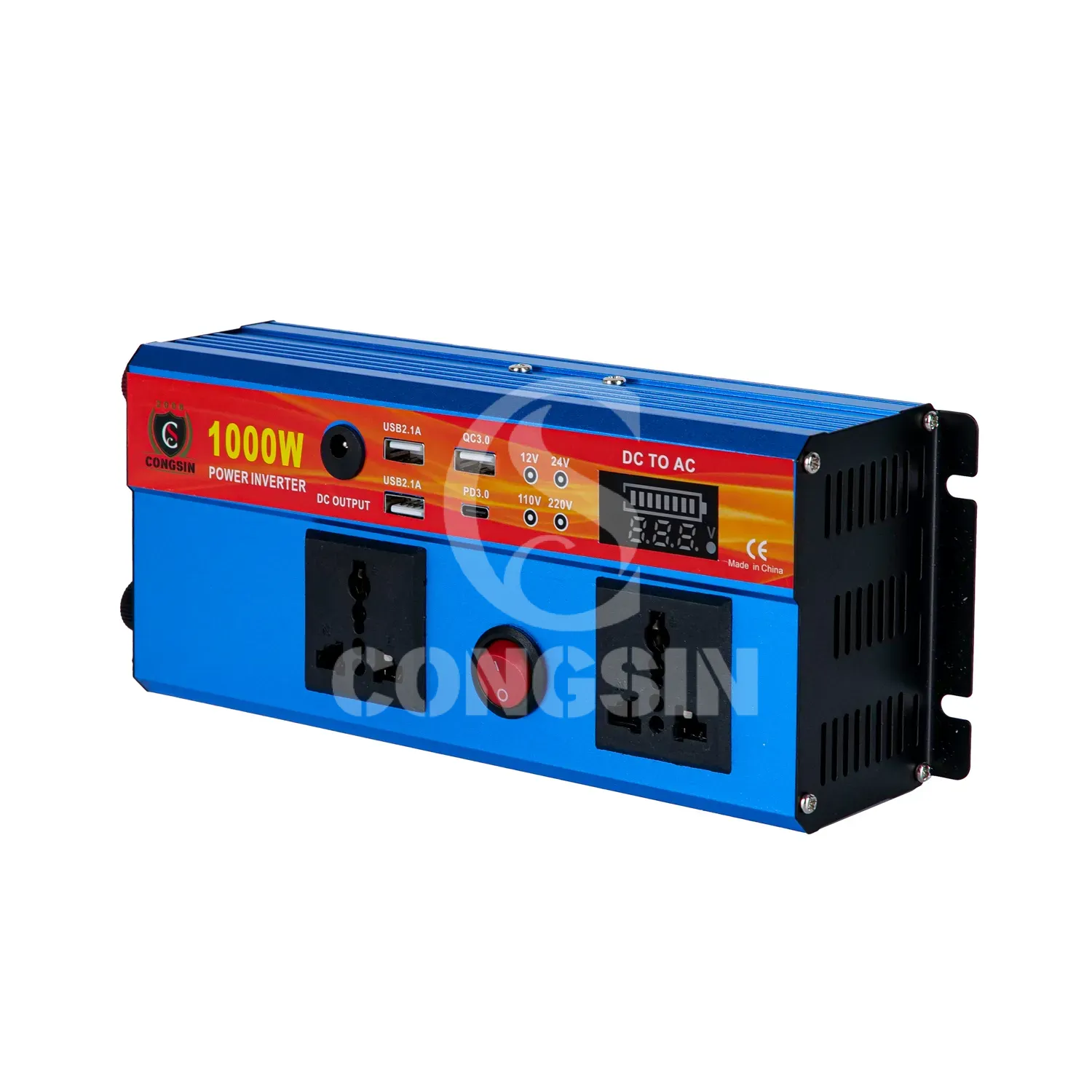
The universal socket is compatible with most national plug specifications, such as GB, US, EU, etc., and can meet the use of devices in different regions (some require adapters).
Which types of batteries can it be used with?
It is suitable for common DC batteries such as 12V lead-acid batteries and lithium batteries. Please ensure the battery voltage matches the inverter's input voltage before use.
Which region’s voltage standards does it support?
It defaults to AC 220V output, suitable for regions with 220V voltage standards such as China and Europe; it can also be customized to output AC 110V, suitable for regions with 110V voltage standards such as the United States and Japan.
Get in Touch with Our Team
You can also communicate with us directly through our online contact form. Please fill in the following information, and our team will contact you as soon as possible after receiving your message.

CONGSIN is a trusted OEM factory for power inverters, solar charge controllers, and DC converters. Reliable solutions for global B2B buyers.
 High Quality
 7/24 Service
 Guaranteed Warranty
© 2025 Congsin. All Rights Reserved.